Featured
Table of Contents
That maximizes money in the short-term, and you might have three to 4 years to save towards the negotiation quantity. Really dangerous to credit rating, primarily because of missed settlements and an adverse "cleared up" mark that might remain on your credit rating report for approximately seven yearsMay be only option if other choices (debt loan consolidation, equilibrium transfer bank card, financial debt mercy) aren't possibleTypically calls for a cost to the 3rd event, which might balance out some or every one of the savings from financial obligation settlementMay help you stay clear of bankruptcy if you have actually missed a number of paymentsNot all financial institutions collaborate with financial debt settlement firms Debt forgiveness may be ideal for you if you are experiencing a financial challenge that makes it nearly impossible to pay for your financial debt balances.
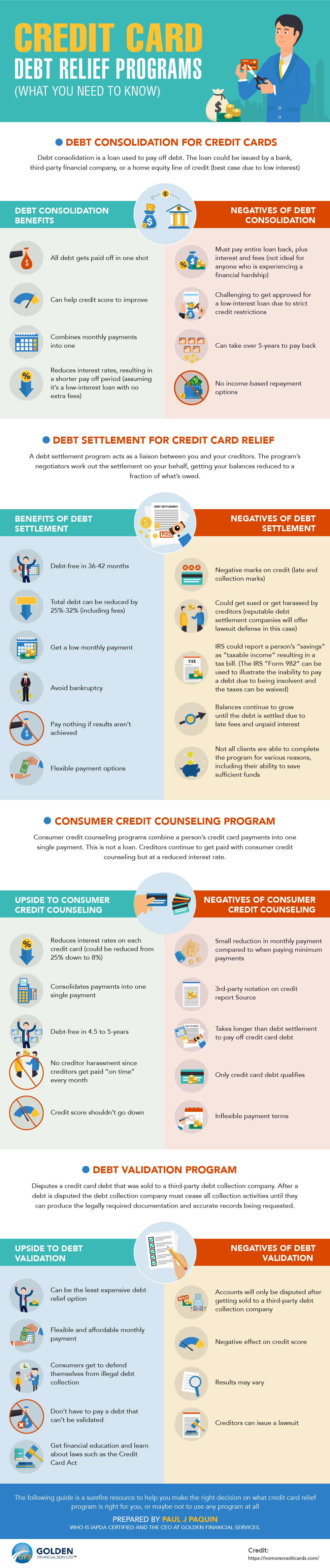
With a DMP, you make one month-to-month settlement to the credit therapy firm. Those funds are after that distributed to financial institutions of your unprotected financial obligations, such as charge card and installment fundings. The firm deals with your lenders to reduce rates of interest or waive costs, yet some creditors may refuse such giving ins.
It can help you pay down debt if you're able to secure a car loan price that's lower than the average rate of the accounts you're consolidating. You must refrain from racking up debt on those recently gotten rid of accounts or your financial debt could grow also greater.
These cards frequently offer a 0% interest introductory duration of approximately 21 months. That gives you lots of time to remove or substantially minimize your balance while making interest-free payments. For some people encountering impossible financial debt, personal bankruptcy might be the only means to stop collection process and lawfully fix their financial obligations.
Steps You Can Take to Rebuild Your Finances Fundamentals Explained
You may require it if your creditor or a collection firm ever tries to gather on the financial obligation in the future. When a loan provider forgives $600 or more, they are needed to send you Type 1099-C.
Debt forgiveness or settlement often harms your credit history. Anytime you clear up a financial obligation for less than you owe, it might show up as "cleared up" on your debt record and influence your credit history for 7 years from the date of settlement. Your credit score can also drop considerably in the months causing the forgiveness if you fall behind on payments.
7 Easy Facts About Permanent Impact of Your Credit History Explained
This circumstance usually results from underreporting earnings, not submitting returns on time, or inconsistencies found throughout an Internal revenue service audit. The consequences of accumulating tax debt are major and can consist of tax liens, which offer the Internal revenue service a legal claim to your home as safety and security for the financial obligation.
Wages and Financial institution Accounts Internal revenue service can impose (seize) earnings and financial institution accounts to satisfy the financial debt. Home Seizure In extreme cases, the Internal revenue service can seize and sell home to cover the financial obligation.
Social Stigma Encountering legal action from the Internal revenue service can carry social stigma. Employment Opportunities A bad credit rating score due to tax financial debt can limit employment possibilities. Government Benefits Tax debt may influence eligibility for government benefits, such as Social Protection and Medicaid.
Rumored Buzz on Maintaining a Healthy Financial Plan for Long-Term Security
The OIC takes into consideration a number of elements, including the taxpayer's earnings, costs, possession equity, and capacity to pay. Effectively discussing an OIC can be complicated, needing a thorough understanding of the internal revenue service's guidelines and a solid disagreement for why your offer aligns with your ability to pay. It's important to note that not all applications are accepted, and the process needs comprehensive financial disclosure.
The IRS examines your overall financial situation, including your revenue, costs, property equity, and capacity to pay. You have to additionally be current with all declaring and payment needs and not remain in an open insolvency case. The internal revenue service also considers your conformity history, evaluating whether you have a document of prompt filing and paying taxes in previous years.
Indicators on Staying Safe Against Dishonest Schemes You Need To Know
The application procedure for an Offer in Concession entails a number of comprehensive actions. First, you have to complete and send internal revenue service Form 656, the Deal in Compromise application, and Form 433-A (OIC), a collection information statement for people. These forms need extensive financial details, consisting of details about your income, financial debts, costs, and assets.
Back tax obligations, which are unpaid tax obligations from previous years, can dramatically increase your total IRS financial debt otherwise dealt with immediately. This financial debt can build up interest and late settlement penalties, making the initial amount owed much bigger over time. Failure to repay taxes can result in the IRS taking enforcement actions, such as providing a tax lien or levy against your residential property.
It is essential to resolve back tax obligations as quickly as possible, either by paying the total owed or by preparing a payment plan with the internal revenue service. By taking aggressive steps, you can stay clear of the build-up of additional interest and fines, and stop much more aggressive collection actions by the internal revenue service.
One usual factor is the idea that the taxpayer can pay the complete amount either as a lump sum or with a layaway plan. The IRS additionally thinks about the taxpayer's income, expenses, asset equity, and future earning possibility. If these aspects show that the taxpayer can afford to pay greater than the provided quantity, the internal revenue service is likely to decline the deal.
3 Simple Techniques For Initial Consultation and What to Bring
It is important to give precise and complete details in your application and to seek advice from with a tax expert to enhance the opportunities of approval. Taking care of IRS financial debt can be complex and difficult. Tax specialists, such as CPAs, tax attorneys, or signed up agents, can give important aid. They have the knowledge to navigate the details of tax law and IRS treatments.

Table of Contents
Latest Posts
Excitement About Is It Worthwhile to Invest in Professional Bankruptcy Guidance
Getting The Recovering Your Credit Score the Strategic Way To Work
Not known Incorrect Statements About Recovering Personal Financial Standing Following Debt Forgiveness
More
Latest Posts
Excitement About Is It Worthwhile to Invest in Professional Bankruptcy Guidance
Getting The Recovering Your Credit Score the Strategic Way To Work
Not known Incorrect Statements About Recovering Personal Financial Standing Following Debt Forgiveness